


The hacker mindset, open source, and getting more out of hardware you already own.
I wanted an exercise bike to get fit, enjoy myself, and track whether I was making progress.
Venturing down the stationary bike shopping rabbit hole, I quickly realized I wasn’t just choosing a piece of hardware. I was choosing an ecosystem of applications, coaches, training programs, subscriptions—and potentially some limitations on what I could do outside the manufacturer’s preferred setup.
Manufacturers have incentives to keep you inside their ecosystem. Sometimes that makes the experience simpler. Sometimes it means hardware you’ve already paid for remains dependent on their software, subscriptions, and business decisions.
That raises a question: when a feature is “exclusive,” where does that exclusivity actually come from? Is there something different about the hardware, or is the difference in which software can talk to it?
Those aren’t the same thing.
I wanted a bike, not a permanent commitment
There are legitimate reasons to pay for an application. Good coaching, useful features, reliable service, and ongoing development all take work. I’m not arguing that everything should be free.
I’m arguing that buying hardware should give you choices about how to use it—not just permission to use it the manufacturer’s preferred way.
During my research, I discovered QZ, a project by Roberto Viola that connects compatible exercise equipment with other fitness applications. The idea was straightforward: use software to bridge the gap between what the equipment communicates and what another application understands.
After looking into the project, I was sold. I bought a mid-tier Echelon bike and dove in.
I started with Echelon’s own application and training programs. They worked well, but I wanted to explore other coaches, other training platforms, and other ways to use the bike. I also wanted access to useful workout data so I could understand whether I was making progress or just spinning my wheels.
So I installed QZ.
What did I actually gain?
The short version: choice.
The more useful version involves a few examples.
Echelon and Peloton use different resistance scales. If you’re following a Peloton class on an Echelon bike, the instructor’s resistance callout doesn’t directly match the number on your bike. QZ translates the bike’s resistance into a corresponding Peloton value, making those classes easier to follow. It isn’t a guarantee that two different bikes will feel identical, but it gives you a practical reference instead of leaving you to guess.
I could use Zwift. My bike didn’t natively support it, but QZ provided the connection. The same equipment could now be part of a virtual cycling world where I could ride and race with other people. I had a community of riders I could interact with, helping to keep me engaged.
I could bring data together. My Garmin ANT+ heart-rate data could become part of the same workout feed, and my results could go to Strava. QZ also supports exporting workout files in FIT and GPX formats, giving me more options for where to take that data.
This wasn’t a way to get paid services for free. The services still had their own subscriptions and requirements. What changed was my ability to use the hardware I already owned with them.
QZ can also do more than pass numbers in one direction. On supported bikes, another application can send resistance adjustments back through QZ. In Zwift’s ERG workout mode, that means resistance can adjust as you pedal to help you reach the workout’s target power. Where automatic adjustment isn’t supported, QZ can display the target resistance instead.
That’s a lot more useful than being told, “Your bike doesn’t work with that.”
The data nerd in me wanted to understand the numbers. The inner child wanted to race other people. The adult appreciated not needing another bike to do it all.
And I learned that Zwift is a lot of fun while being a *REALLY* heavy workout at times. Seriously, don’t go uphill unless you’re ready for pain.
Eighty activities, not just a technical experiment

Between January and September 2021, I logged 80 activities on Strava—mostly Zwift rides with Peloton classes in the mix as well.
This wasn’t just a compatibility trick I tried once. It became part of how I exercised.
I can’t say those 80 activities wouldn’t have happened without QZ. Maybe I would have found something else that kept me interested. But this was the setup I chose, and the ability to connect those systems made it possible.
Access to data is only the beginning
Getting more numbers on a screen doesn’t automatically mean you understand them.
Some workout metrics come from sensors. Others are calculated. Depending on the equipment, QZ can receive power data or calculate it from resistance and cadence. Calories and distance are estimates, and calibration settings can change what gets reported to other applications.
That distinction matters.
A number can be useful without being a laboratory measurement. But if I’m comparing workouts—or comparing myself with another rider—I need to understand enough about where that number came from to know what the comparison means.
For me, that became part of the appeal. I wasn’t just collecting data. I was learning how the equipment and software produced it.
Which brings me to the hacker mindset.
Hacking doesn’t have to mean breaking in
When people hear “hacker,” they often think of someone breaking into a computer system for nefarious reasons.
That isn’t what I mean here. Hacking is about being curious about how something works. Asking whether its advertised limitations are technical necessities or simply what the manufacturer chose to offer.
Does it have to work that way?
What happens if these two things can talk to each other?
Can someone build the missing piece?
That curiosity pulled me into the QZ Facebook community. I asked questions, provided feedback and logs, and eventually became a moderator. It became a hyperfocus of mine for a while, and I learned a lot about both the technology and how to get more out of my workouts.
I didn’t need to understand every line of code to participate.
A useful log can help someone investigate a problem. Testing can show whether a change works. Answering a question can save the next person hours of frustration. A new piece of information can unlock an entire world of possibilities.
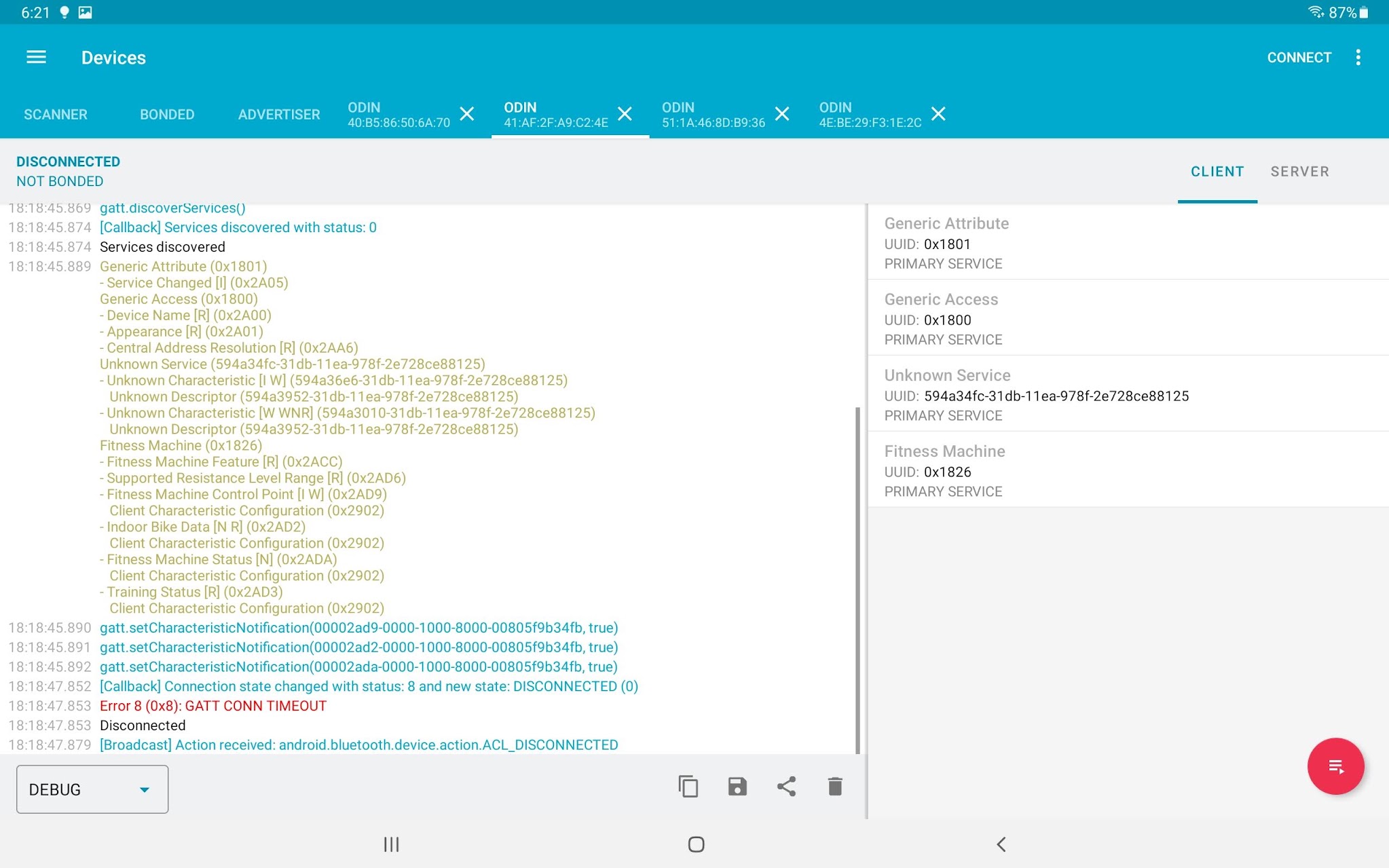
That’s an important part of the story for me. The code matters but so do the people making the project useful: developers, testers, documentation writers, moderators, and users willing to share what they find.
It’s people sharing what they know so the next person can continue to innovate and do more.
A computer with pedals
Once I started looking at the bike as a computer with pedals, the overlap between hardware and software became hard to ignore.
The physical equipment mattered. So did the software interpreting its data and controlling how other applications could interact with it.
An integrated ecosystem can be convenient. A manufacturer also has reasonable limits on what it can test and support.
But “we don’t support that” and “we prevent that from working” are different positions.
This is where interoperability—the ability of different systems to work together—connects with right to repair. They aren’t the same thing: choosing another training application isn’t the same as replacing a broken component. But both concern how much control stays with the person who bought the hardware.
Can I maintain it? Can I choose the software? Can I access and move my workout records? Can someone else help me keep it useful?
I don’t think everyone should have to turn an exercise bike into a technology project. Some people just want to get on and pedal. That’s completely reasonable. Alternative setups can also mean compatibility checks, configuration, and troubleshooting.
I think people should have the choice.
I started out looking for a way to get fit, have fun, and measure my progress. Along the way, I found a community and a reminder that the intended use of a product isn’t necessarily the limit of what it can do.
Sometimes the hacker mindset starts with a very ordinary question:
I bought the hardware. So why can’t I choose the software?
Leave a Reply
You must be logged in to post a comment.